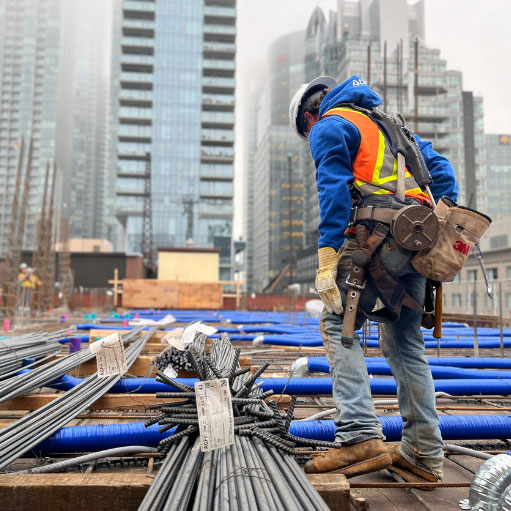
At AGF, we know that hands are our most valuable tools. They hold, lift, cut, grip, and build… and unfortunately, they are often the first victims of preventable accidents. Cuts, crush injuries, burns, fractures, hand injuries are among the most common incidents in construction.
To raise awareness among our teams, we launched a hand safety campaign in November, with a different theme each week to highlight best practices in health and safety.
The importance of slowing down and taking time
The month started with a focus on slowing down and taking the time to do things properly. As Julie Trépanier, HSE Director for Eastern Canada, points out:
“It’s better to take an extra two minutes than to lose a finger! Taking the time to do things properly is the first step in preventing injuries.”
Rushing often means forgetting your gloves, overlooking hazards or underestimating risks. At AGF, we remind our teams that it’s essential to prepare your equipments properly, observe your surroundings and work safely.
Never put your hands where they don’t belong
Another theme of the campaign focused on vigilance around high-risk areas: pinch points, sharp edges, moving parts. Safety guards and protection devices on tools and machinery exist to protect our teams. Following these measures is critical to prevent accidents.
Wearing the right gloves for the job
At AGF, we emphasize the importance of wearing the right gloves for the specific risk, whether it’s cuts, abrasions, punctures, electrical hazards, fire, cold, and more. The right glove size is also essential to ensure comfort and safety.
Double Protection: Gloves + Sleeves
The campaign also highlighted double protection: gloves + sleeves, a practice mandatory for over a year now on our worksites and in our shops. This measure protects not only the hands but also the forearms. Julie notes:
“Thanks to gloves and sleeves, we have significantly reduced laceration injuries among our teams.”
A Shared Responsibility
November gave us the opportunity to remind everyone that protecting your hands is not a constraint, it’s a responsibility. Slowing down, using the right equipment and staying vigilant are simple yet essential steps to ensure everyone can work safely and return home with their hands intact.